Creative Food ART.

food-art-01

food-art-02

food-art-03

food-art-04

food-art-05

food-art-06

food-art-07

food-art-08

food-art-09

food-art-10

food-art-11

food-art-12

food-art-13

food-art-14

food-art-15

food-art-16

food-art-17

food-art-18

food-art-19

food-art-20

food_artTo exist is to change, to change is to mature, to mature is to go on creating oneself endlessly. It says all about Creativity .

Photoshop is an excellent tool for designers to prove their own creativity .

There are lots of funny Photoshop pictures designers available .

Think left and think right and think low and think high . Oh , the thinks you can think up if only you try . The following pictures are extreme creative work done by Photoshop designers .

If you liked this article, subscribe to the feed by clicking the image below to keep informed about new contents of the blog:

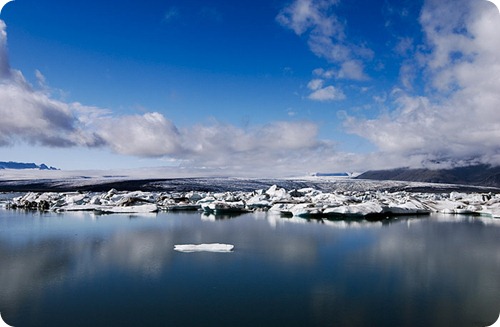
Jökulsárlón is a large glacial lagoon in southeast Iceland, on the borders of Vatnajökull National Park.

Jökulsárlón #5

Jökulsárlón #3

Jökulsárlón #2

Jökulsárlón #1

Skue at Glacier Lagoon

jokulsarlon10

Jokulsarlon_lake,_Iceland

Jökulsárlón #5Jökulsárlón (literally "glacial river lagoon") is a large glacial lagoon in southeast Iceland, on the borders of Vatnajökull National Park.

Situated at the head of Breiðamerkurjökull, it evolved into a lagoon after the glacier started receding from the edge of the Atlantic Ocean. The lake has grown since then at varying rates because of melting of the Icelandic glaciers.

The lagoon now stands 1.5 kilometres (0.93 mi) away from the ocean's edge and covers an area of about 18 km2 (6.9 sq mi). It recently became the deepest lake in Iceland at over 248 metres (814 ft) depth as glacial retreat extended its boundaries. The size of the lagoon has increased fourfold since the 1970s. It is considered as one of the natural wonders of Iceland.

The lagoon can be seen along Route 1 between Höfn and Skaftafell. It presents a picturesque parade termed as “A ghostly procession of luminous blue ice-bergs through the 17 km2 (6.6 sq mi) (18 km2 (6.9 sq mi) as reported in other sources) Jokulsarlon Lagoon”.

jokulsarl_mapJökulsárlón has been a setting for four Hollywood movies -- A View to a Kill, Die Another Day, Tomb Raider and Batman Begins -- in addition to the reality-TV series Amazing Race.[3][6] A postage stamp depicting Jökulsárlón was issued in 1991 with a face value of 26 krónur.

The tongue of the Breiðamerkurjökull glacier is a major attraction for tourists. Tour operators conduct snowmobiles and jeep tours to visit the glacier along the winding iceberg studded Jökulsárlón Lagoon. The base station for visits to the area is at Joklasel, which is approached from Hofn. It is termed as Tourist Conveyor belt


If you liked this article, subscribe to the feed by clicking the image below to keep informed about new contents of the blog:

The Titanca, spectacular endemic plant of the Andes, it blooms only once for a few weeks in its hundred years of life, then dies.

puya1

puya2

puya3

puya4

puya5

puya6

puya7

puya8

puya9

Puya raimondiiPuya raimondii, also known as Queen of the Andes, is an endemic species of Bolivia and Peru, and whose distribution is restricted to the high Andes at an elevation of 3200 – 4800 m. It was the French scientist Alcide d'Orbigny (1802–1857) who was the first non-native person to discover it in 1830, in the region of Vacas, Cochabamba Department, in Bolivia at an altitude of 3960 m (12,992 ft).

The name of Puya raimondii commemorates the Italian scientist Antonio Raimondi (1826–1890), who resided in Peru for many years and made wide botanical explorations there.

He discovered this species later in Peru in the region of Chavín de Huantar and published it as Pourretia gigantea in El Perú, Volume 1, Page 297 . In 1928, the name was changed to Puya raimondii by the German botanist Hermann Harms.

peru-mapThis plant has a gigantic inflorescence that may reach up to 10 m height, with more than three thousand flowers and six million seeds in each plant. Its reproductive cycle is approximately 40 years.

One planted near sea level at the University of California Botanical Garden, USA, in 1958 grew to 7,6 m (24 ft 11) in and bloomed as early as August 1986 after only 28 years. It is not only the largest of the Puya species, but also the largest Bromeliad. It can reach 3 m tall in vegetative growth, with a flower spike 9–10 m tall.

Like most Bromeliads, it dies soon after flowering. It is considered to be an endangered species. Seeds were collected of P. raimondii in 1999 and 2000 of the rodales of Huashta Cruz (district Pueblo Libre, Ancash region, Peru), near the city of Caraz. It is also known to grow in the Masma Chicche District of Jauja Province.

Only 45 km West from Caraz (Ancash - Peru) at 4200m above sea level, at Huashta Cruz, on the Cordillera Negra, there is a "rodal" of puyas, with an impressive 145 km view of the Cordillera Blanca. The place is known as "Huinchus", and the Giant Hummingbird (Patagona gigas) is often spotted here.

These plants are mainly located in the three important places of Ancash: the gully of Ingenio in Catac, the punas of Cajamarquilla and the gully of Queshque, also in Catac.

In Bolivia - apart from Vacas Municipality where these plants are spread on an area of about 1 km² - the only other place to find Puya raimondii is Comanche mountain in Caquiaviri Canton, Caquiaviri Municipality, Pacajes Province, La Paz Department.

Conservation status

Endangered

The Grand Canyon is a huge fissure in the Colorado Plateau that exposes uplifted Proterozoic and Paleozoic strata.

grand-canyon
grand-canyon1
grand-canyon2
grand-canyon4
grand-canyon6
grand-canyon7
grand-canyon8
grand-canyon9 
-->
grand-canyon10
grand-canyon11
Grand_Canyon Stratigraphy
Grand_Canyon1
grand-canyon3The Grand Canyon is a steep-sided canyon carved by the Colorado River in the United States in the state of Arizona. It is contained within and managed by Grand Canyon National Park, the Hualapai Tribal Nation, and the Havasupai Tribe.

President Theodore Roosevelt was a major proponent of preservation of the Grand Canyon area, and visited it on numerous occasions to hunt and enjoy the scenery. It is considered one of the Seven Natural Wonders of the World.

The Grand Canyon is 277 miles (446 km) long, up to 18 miles (29 km) wide and attains a depth of over a mile (6,000 feet / 1,800 metres) Nearly two billion years of the Earth's geological history have been exposed as the Colorado River and its tributaries cut their channels through layer after layer of rock while the Colorado Plateau was uplifted.

While the specific geologic processes and timing that formed the Grand Canyon are the subject of debate by geologists, recent evidence suggests the Colorado River established its course through the canyon at least 17 million years ago. Since that time, the Colorado River continued to erode and form the canyon to its present-day configuration.

grand_cannyon_mapFor thousands of years, the area has been continuously inhabited by Native Americans who built settlements within the canyon and its many caves. The Pueblo people considered the Grand Canyon ("Ongtupqa" in Hopi language) a holy site and made pilgrimages to it. The first European known to have viewed the Grand Canyon was García López de Cárdenas from Spain, who arrived in 1540.

The Grand Canyon is a huge fissure in the Colorado Plateau that exposes uplifted Proterozoic and Paleozoic strata, and is also one of the 19 distinct physiographic sections of the Colorado Plateau province.

It is not the deepest canyon in the world (Kali Gandaki Gorge in Nepal is far deeper), nor the widest (Capertee Valley in Australia is about 0.6 mi/1 km wider and longer than Grand Canyon); however, the Grand Canyon is known for its visually overwhelming size and its intricate and colorful landscape. Geologically it is significant because of the thick sequence of ancient rocks that are beautifully preserved and exposed in the walls of the canyon. These rock layers record much of the early geologic history of the North American continent.

 
If you liked this article, subscribe to the feed by clicking the image below to keep informed about new contents of the blog:

Recent Posts

Antipixels & Counters

Add to Technorati Favorites Peru Blogs BlogESfera Directorio de Blogs Hispanos - Agrega tu Blog

blogspot hit counter

Facebook Twitter RSS